Modern homes and workplaces contain more electrical and electronic equipment than ever before. Smartphones, Wi-Fi equipment, computers, televisions, chargers, kitchen appliances, power strips, lighting systems, and other devices all operate using electricity or electromagnetic energy. As a result, electric and magnetic fields are a normal part of everyday environments.
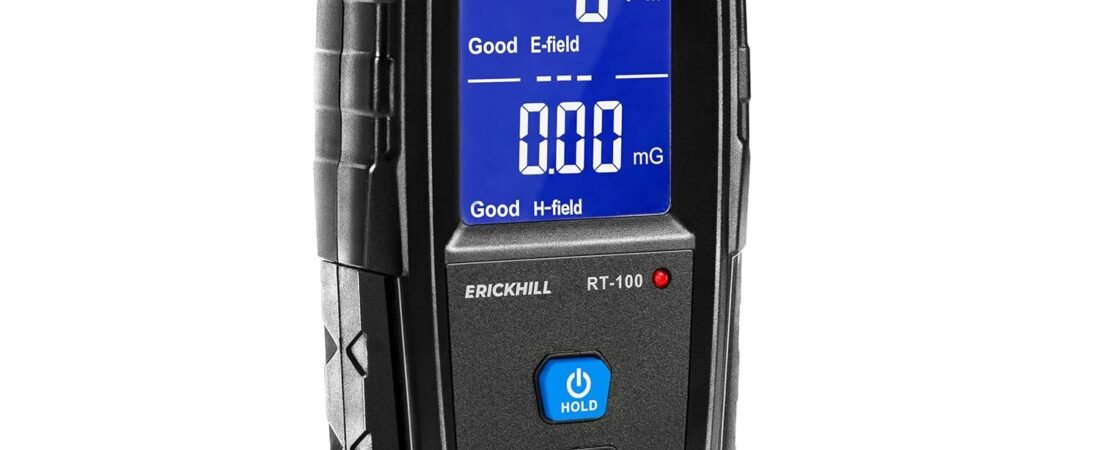
For people who want to understand their surroundings more closely, an EMF meter can provide a practical way to detect and observe electromagnetic field activity. The EMF Meter, Detects Electric and Magnetic Fields, Handheld Digital EMF Detector with LCD Display, Sound-Light Alarm, Rechargeable Battery for Home, Office, and Appliances is designed around this type of measurement.
A handheld detector can be useful for locating areas where field readings change, comparing different appliances, investigating electrical equipment, or simply learning more about the electromagnetic environment around a home or office. Rather than treating a reading as a simple indication of whether something is “safe” or “unsafe,” it is more useful to understand what the instrument is actually measuring and how distance, orientation, electrical load, and the surrounding environment can affect the result.
Electric and magnetic fields are associated with many everyday electrical systems. The U.S. Environmental Protection Agency explains that electric fields are associated with electrical charges, while magnetic fields are associated with moving electrical charges or current. These fields can be found around power lines, wiring, and electrical appliances.
This guide explains the role of a handheld EMF detector, the features associated with this type of device, practical ways to use it, important measurement considerations, and how an EMF meter differs from other types of environmental or electrical testing equipment.
Understanding EMF Before Using a Meter
The term “EMF” can refer to several related concepts, so understanding the terminology helps prevent misinterpretation.
Electric and magnetic fields occur naturally as well as from human-made electrical and electronic systems. The Earth’s magnetic field is one example of a naturally occurring field. Electrical appliances and power distribution systems are common man-made sources.
The electromagnetic spectrum covers a broad range of frequencies. Static fields, extremely-low-frequency fields, radiofrequency fields, visible light, ultraviolet radiation, X-rays, and other forms occupy different portions of that spectrum.
For everyday electrical measurements, the distinction between electric fields and magnetic fields is particularly important. An electric field is related to electrical charge and is commonly expressed in volts per meter (V/m). Magnetic field measurements can be expressed using units such as tesla or microtesla, while other instruments may use gauss or milligauss depending on the measurement system.
A handheld EMF detector should therefore be viewed as a measurement instrument rather than a general-purpose radiation analyzer. Its capabilities depend on the sensors, frequency range, measurement modes, calibration, sensitivity, and other technical characteristics specified by the manufacturer.
Key Features of the Handheld EMF Meter
The product is designed as a compact handheld digital EMF detector for observing electric and magnetic field activity. Several features make this type of meter practical for everyday investigation.
Digital LCD Display
A digital LCD display allows measurements to be viewed directly on the device rather than requiring a separate computer or smartphone.
This can be useful when moving around a room and taking readings at different locations. Instead of writing down every observation immediately, the user can watch how the displayed value changes while moving the meter closer to or farther away from a suspected source.
A clear digital display is particularly helpful during comparisons. For example, a user might measure an area beside a powered appliance, move the meter several feet away, and then take another reading. The objective is not necessarily to obtain one isolated number but to observe how the measured field changes with position.
Detection of Electric and Magnetic Fields
The product is described as detecting electric and magnetic fields. This is important because electrical environments can contain different types of fields depending on the source and operating conditions.
A household appliance can generate a field while operating, and the measured level can vary depending on the appliance’s design, power consumption, distance from the meter, and operating state.
The EPA notes that electromagnetic field levels can vary with time, location, and electrical load. Distance is also important because field strength generally decreases as you move away from many common sources.
This makes a handheld meter particularly useful for comparative measurements.
Sound and Light Alarm
The sound-and-light alarm provides an additional way of noticing when a measured value reaches a particular detection or alarm condition.
This can be useful when the user is concentrating on positioning the meter rather than continuously looking at the LCD display. An audible indication can draw attention to a change, while a visual signal can make the detection easier to notice in different environments.
An alarm should not automatically be interpreted as a health warning. The alarm threshold is a feature of the instrument and should be understood according to the manufacturer’s instructions.
Rechargeable Battery
A rechargeable battery makes the handheld format convenient for moving between rooms and locations without remaining connected to a power outlet during measurements.
This is especially useful for checking multiple appliances, electrical outlets, workstations, bedrooms, offices, or other areas where a wired instrument would be inconvenient.
As with other rechargeable electronic devices, battery runtime can vary depending on use, display activity, alarm operation, battery condition, and other factors. Following the manufacturer’s charging instructions is important for maintaining the device properly.
Handheld Form Factor
A handheld meter can be moved through an environment relatively easily.
Instead of installing a permanent monitoring system, users can carry the detector from a desk to a bedroom, kitchen, office, workshop, or other area and take measurements at different distances and orientations.
The portable format also makes it easier to compare multiple electrical devices under similar conditions.
How an EMF Meter Can Be Used Around the Home
One of the most straightforward applications is learning how field readings change around common household equipment.
A user might begin by establishing a baseline reading in an area away from obvious electrical equipment. The meter can then be moved toward a device while observing changes on the display.
Possible items for comparison include:
- Computers
- Monitors
- Televisions
- Chargers
- Power strips
- Lamps
- Kitchen appliances
- Refrigerators
- Fans
- Electric motors
- Extension cords
- Electrical panels
- Other powered equipment
The purpose of this exercise is educational and comparative. A higher reading close to an appliance does not, by itself, establish that the appliance presents a health hazard.
Comparing Distance
Distance is one of the most useful variables to explore.
For many electrical sources, field levels decrease as distance increases. The EPA specifically notes that magnetic field exposure from power lines decreases with distance, while field measurements around appliances can also change substantially as the measuring position changes.
A simple experiment could involve taking measurements at several consistent distances.
For example:
- Select one appliance.
- Measure with the appliance operating normally.
- Record the reading at a close but safe position.
- Move farther away.
- Take another reading.
- Repeat at several distances.
- Compare the results.
Keeping the measurement method consistent makes the comparison more meaningful.
Comparing Appliances
Another useful application is comparing different devices.
A user might measure a lamp, monitor, laptop power adapter, fan, and other equipment. However, comparisons should be made carefully because different devices can generate different types and frequencies of fields.
The electrical load also matters. An appliance operating under one condition may produce different field characteristics from the same appliance operating under another condition.
For that reason, a single reading should not be treated as a permanent characteristic of an appliance.
Using the Meter in an Office
Workstations often contain several electrical devices in a relatively small space.
A typical desk might include a computer, monitor, docking station, speakers, chargers, power strip, desk lamp, printer, and networking equipment. A handheld EMF detector can be used to investigate how readings vary around this collection of equipment.
Rather than focusing on one number, users can map relative changes around the workstation.
For example, measurements could be taken:
- In front of the monitor
- Beside the computer
- Near the power strip
- Around charging equipment
- Near cable bundles
- At the edge of the desk
- Several feet away from the workstation
This type of comparison can help users understand how electrical equipment contributes to the local electromagnetic environment.
Checking Chargers, Cables, and Power Equipment
Power adapters and charging equipment can also be interesting objects for measurement.
A charger connected to a device and drawing power may behave differently from an unplugged charger. Similarly, a cable carrying current can produce a magnetic field associated with that current.
When making comparisons, it is useful to keep the conditions consistent. If one charger is measured while actively charging a device and another is measured while idle, the results may not provide a direct comparison.
The same principle applies to power strips and extension cords. Their readings may depend on what equipment is connected and operating.
Understanding Changes in Readings
A common mistake with handheld measurement equipment is assuming that every fluctuation represents a meaningful change in the source.
In reality, readings can change because of several factors.
Distance
Moving the meter even a relatively small distance can change the measured field.
Orientation
The direction in which a sensor faces can matter, particularly with instruments that do not measure all field directions equally.
Electrical Load
An appliance drawing different amounts of current may produce different magnetic-field levels.
Nearby Equipment
A reading can be affected by other electrical sources in the surrounding environment. A measurement beside one device may therefore include contributions from nearby wiring or equipment.
Time
Some electrical equipment cycles on and off or changes its operating state. A refrigerator, heating system, motor, or other appliance may therefore produce changing measurements.
Because of these variables, repeat measurements are often more informative than one isolated reading.
A Practical Measurement Method
For people new to EMF measurement, a simple and repeatable approach can make the process easier.
Step 1: Establish a Baseline
Start in an area where the suspected source is relatively distant.
Record the displayed value if you are keeping notes.
Step 2: Identify One Source
Choose one appliance or electrical device to investigate.
Avoid moving several devices at once because that makes it harder to understand which source may be influencing the reading.
Step 3: Measure at a Consistent Position
Hold the meter in a stable position and observe the display.
If the instrument’s instructions specify a particular orientation or operating procedure, follow those instructions.
Step 4: Change Only One Variable
Move the meter farther away while keeping the appliance in the same operating state.
This makes distance the main variable.
Step 5: Repeat the Measurement
Take several readings rather than relying on one momentary value.
If the number changes significantly, consider whether the appliance’s operating state or another nearby source has changed.
Step 6: Compare Results
The resulting measurements can provide a practical picture of how field readings vary around the environment.
This method is more useful than simply walking around and reacting to every alarm or changing number.
Who May Find an EMF Meter Useful?
A handheld detector may be suitable for several types of users.
Homeowners and Renters
People who are curious about their home’s electrical environment can use an EMF detector to explore differences between rooms and appliances.
Technology Enthusiasts
Users interested in electronics and environmental measurements may enjoy experimenting with different devices and observing how electrical systems affect measurements.
DIY Users
Someone working on a home office, workshop, or electronics area may find a handheld measurement tool useful as part of a broader investigation.
Students and Educators
An EMF meter can also serve as an educational tool for demonstrating concepts such as electric fields, magnetic fields, current, distance, and measurement variability.
Office Users
People managing technology-heavy workspaces can use comparative measurements to learn more about the electrical environment around desks and equipment.
It is important, however, to distinguish an educational or consumer detector from professional electromagnetic-field surveying equipment. Professional applications may require instruments with documented calibration, specific frequency ranges, defined accuracy, traceability, and specialized measurement procedures.
Important Things to Consider Before Interpreting a Reading
An EMF meter produces measurements, but interpreting those measurements requires context.
A Reading Does Not Automatically Mean a Health Risk
This is one of the most important points when using an EMF detector.
The EPA has explained that measuring electric or magnetic fields does not by itself determine whether an exposure is harmful or increases health risk.
A number on a display is simply a measurement under particular conditions. Whether a measurement is relevant to a health standard or exposure guideline depends on factors such as frequency, field type, duration, distance, applicable standards, and the characteristics of the measurement instrument.
Therefore, it is inappropriate to treat an alarm as a medical or health diagnosis.
Not Every EMF Meter Measures the Same Things
The phrase “EMF meter” covers a wide range of instruments.
Some devices are designed primarily for low-frequency electric and magnetic fields. Others are intended for radiofrequency measurements. Professional instruments may have specialized probes and calibrated frequency responses.
Before using any detector for a particular application, users should verify the manufacturer’s stated measurement range and capabilities.
Frequency Matters
Electric and magnetic fields exist across a broad range of frequencies.
Extremely-low-frequency fields associated with electrical power systems are different from radiofrequency fields used by wireless communications. The EPA describes ELF fields as occupying roughly 1 Hz to 3 kHz, while RF fields occupy much higher frequencies.
Consequently, an instrument designed for one type of measurement should not automatically be assumed to provide comprehensive measurements across the entire electromagnetic spectrum.
Measurement Accuracy Matters
Consumer meters can be useful for relative comparisons, but users should not assume that a displayed number has laboratory-grade accuracy unless the manufacturer provides appropriate technical documentation.
Calibration, sensor design, frequency response, environmental conditions, and measurement technique can all affect results.
For professional compliance testing or technically sensitive work, specialized calibrated instruments and qualified personnel may be more appropriate.
Avoid Comparing Unrelated Units
Electric fields and magnetic fields are different physical quantities and may be expressed in different units.
For example, electric field strength may be expressed in V/m, while magnetic flux density may be expressed in tesla or microtesla.
A numerical value from one measurement mode should not be directly compared with a numerical value from another mode simply because both appear on the same screen.
EMF Meter vs. Other Measurement Categories
Different instruments serve different purposes. Understanding these differences can help users choose the right tool for the question they are trying to answer.
EMF Meter vs. Multimeter
A multimeter is designed to measure electrical quantities such as voltage, current, resistance, and continuity.
An EMF detector, by contrast, is intended to detect or measure fields around electrical sources.
A multimeter can help determine whether a circuit has electrical voltage, while an EMF meter can investigate field activity around equipment without necessarily making direct electrical contact with the circuit.
These are complementary tools rather than substitutes.
EMF Meter vs. RF Meter
RF meters are designed specifically for radiofrequency electromagnetic fields.
Depending on the model, they may be used for sources such as wireless communications equipment and other RF transmitters.
An EMF detector designed around electrical and magnetic fields from common appliances may have a different measurement range and sensor configuration.
Users interested specifically in Wi-Fi, cellular, radio, or other RF sources should verify that an instrument is designed for the relevant frequency range.
EMF Meter vs. Professional Field Survey Equipment
Professional field-survey instruments can provide more specialized measurements and may offer calibrated sensors, broader frequency coverage, data logging, directional measurement, or other technical capabilities.
A consumer handheld meter is generally more appropriate for basic observation and comparative measurements.
EMF Meter vs. Smartphone Apps
Smartphone apps may display information from built-in sensors, but they depend heavily on the hardware and sensors available in the particular phone.
A dedicated handheld detector is designed specifically for the measurement task and may provide a more appropriate interface for users interested in field detection.
Neither should automatically be assumed to provide laboratory-grade measurements without supporting technical documentation.
Practical Safety Considerations
Using a handheld detector around electrical equipment does not eliminate the need for normal electrical safety.
Do not open electrical panels, remove appliance covers, touch exposed conductors, or place the meter into unsafe locations simply to obtain a measurement.
The instrument should be used from a safe position.
For electrical troubleshooting involving potentially live circuits, use equipment designed for electrical testing and follow appropriate electrical safety procedures. An EMF detector should not be considered a substitute for a voltage tester, multimeter, electrician, or other specialized electrical-safety equipment.
If an electrical installation appears damaged, overheated, sparking, or otherwise unsafe, the appropriate response is to address the electrical hazard rather than relying on an EMF reading.
How to Get More Consistent Measurements
Consistency is more important than collecting a large number of random readings.
Try to keep several factors constant:
- Use the same measurement mode.
- Keep the meter orientation consistent when possible.
- Measure from known distances.
- Record whether equipment is switched on or off.
- Avoid moving other electrical devices during comparisons.
- Take repeated readings.
- Allow the reading to stabilize when appropriate.
- Follow the manufacturer’s instructions.
- Record unusual environmental conditions.
A simple measurement log can make experiments much easier to understand.
For example:
| Location | Equipment State | Distance | Reading |
|---|---|---|---|
| Desk | Computer on | 10 cm | Recorded value |
| Desk | Computer on | 50 cm | Recorded value |
| Desk | Computer on | 100 cm | Recorded value |
| Kitchen | Appliance on | 10 cm | Recorded value |
| Kitchen | Appliance off | 10 cm | Recorded value |
The actual numbers will depend on the environment and the instrument. The value of the table comes from making measurements under controlled, repeatable conditions.
Frequently Asked Questions
What is an EMF meter?
An EMF meter is an instrument designed to detect or measure electric fields, magnetic fields, electromagnetic fields, or particular portions of the electromagnetic spectrum, depending on its design.
The exact capabilities vary between models, so users should consult the technical specifications and operating instructions for the particular device.
What can this handheld EMF detector be used for?
The product is designed for handheld detection of electric and magnetic fields and can be used around homes, offices, appliances, and other electrical equipment.
Typical uses include comparative measurements, educational experiments, locating changes in field activity, and investigating electrical environments.
Does a high EMF reading mean that something is dangerous?
Not necessarily.
A measurement alone does not establish that an exposure is harmful. The meaning of a reading depends on the field type, frequency, measurement conditions, exposure duration, applicable guidelines, and the characteristics of the measuring instrument.
The EPA specifically notes that EMF measurements do not by themselves determine whether an exposure is harmful.
Can an EMF meter detect electricity inside a wall?
Depending on the instrument’s sensitivity, design, and the electrical conditions involved, field changes associated with wiring may sometimes be detectable. However, the ability to locate wiring or determine whether a conductor is energized should not be assumed.
An EMF detector should not replace a purpose-built electrical wire or voltage detector when electrical safety is involved.
Why does the reading change when I move the meter?
Field strength can change significantly with distance, orientation, electrical load, and nearby sources.
Moving only a short distance can therefore produce a different measurement. The EPA notes that electric and magnetic field measurements can vary according to location and electrical conditions.
Can I use the meter near a computer?
Yes, a computer workstation can be an interesting environment for comparative EMF measurements.
A computer, monitor, power adapter, cables, speakers, chargers, and other equipment can all contribute to the surrounding electrical environment.
Can it measure Wi-Fi signals?
That depends on the detector’s actual frequency range and sensor design.
The term “EMF meter” does not automatically mean that a device measures all forms of radiofrequency radiation. Users interested in Wi-Fi or other RF sources should check the manufacturer’s stated frequency range and measurement specifications.
Why does an appliance produce different readings when it is operating?
Electrical equipment can draw different amounts of current depending on what it is doing.
Motors, heating elements, power supplies, compressors, and other components may operate intermittently or change their electrical load. As a result, field measurements can change over time.
Is the sound and light alarm a health warning?
No assumption like that should be made.
An alarm is a feature of the measuring device that indicates a particular detection or threshold condition. It does not constitute a medical warning or diagnosis.
The relevant threshold should be understood from the product’s operating instructions.
Does an EMF meter measure radiation like an X-ray machine?
An everyday EMF detector should not be confused with an ionizing-radiation detector.
X-rays are ionizing radiation, while many everyday electric and magnetic fields associated with electrical power and electronic equipment are classified as non-ionizing.
The type of radiation or field an instrument can measure depends on its design.
Can I use an EMF meter to test my entire house?
You can use a handheld detector to take measurements in different rooms, but it is important to understand the limitations of a consumer instrument.
A whole-house investigation can become complicated because multiple electrical sources may contribute to readings simultaneously. Professional assessment may be more appropriate when a formal electromagnetic-field survey is required.
How should I interpret a changing reading?
Start by looking for practical explanations.
Check whether you changed distance, orientation, appliance operating state, nearby equipment, or measurement position. Repeat the measurement under the same conditions.
A changing reading is not automatically evidence of a problem.
Final Thoughts
A handheld EMF detector can provide a practical way to explore the electric and magnetic environment around everyday electrical equipment. The EMF Meter, Detects Electric and Magnetic Fields, Handheld Digital EMF Detector with LCD Display, Sound-Light Alarm, Rechargeable Battery for Home, Office, and Appliances combines a portable format with a digital display and sound-and-light detection features intended to make field measurements easier to observe.
Its most useful role is as an educational and comparative measurement tool. Users can investigate how readings change around appliances, computers, chargers, cables, workstations, and other electrical equipment while learning how distance, orientation, electrical load, and surrounding sources influence measurements.
At the same time, EMF measurements should be interpreted carefully. A number displayed by a consumer detector does not automatically indicate whether an exposure is harmful, and different instruments can measure different portions of the electromagnetic spectrum. The EPA and other environmental authorities distinguish between different types of fields and emphasize the importance of understanding what is actually being measured.
For everyday curiosity, basic environmental investigation, and learning about electrical fields, a portable detector can make an otherwise invisible part of the electrical environment easier to observe. The key is to use it consistently, understand its measurement limitations, and avoid treating individual readings as medical or electrical-safety conclusions.